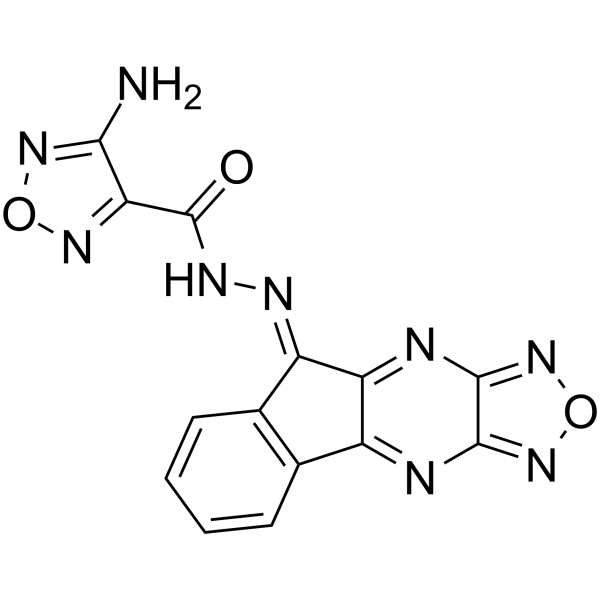
LQZ-7F 是一种生存素二聚化 (survivin dimerization) 抑制剂,可在前列腺癌细胞中诱导自发细胞凋亡 (apoptosis) 并与多西紫杉醇协同作用。LQZ-7F 剂量依赖性地抑制 PC-3 和 C4-2 细胞的存活,IC50分别为 2.99 和 2.47 μM。
| 生物活性 | LQZ-7F, asurvivindimerizationinhibitor, induces spontaneousapoptosisand synergizes with Docetaxel in prostatecancercells. LQZ-7F dose-dependently inhibits survival of both PC-3 and C4-2 cells with IC50s of 2.99 and 2.47 μM, respectively[1]. |
体外研究
(In Vitro) | LQZ-7F could be hudrolyzed under acidic conditions[1].
LQZ-7F (2.5 μM, 72 hours) displays cytotoxicity towards human cancer cells (PC-3, C4-2) with the IC50s of 2.99 μM and 2.74 μM, respectively[1].
LQZ-7F effectively inhibits survival of all cancer cell lines with IC50values ranging between 0.4 and 4.4 mM[2].
LQZ-7F (2 μM, 24 hours) disrupts microtubule structure and cause mitotic arrest in P3 cells[2].
Apoptosis Analysis[1] | Cell Line: | PC3, HL-60 cells | | Concentration: | 0, 5, 10 μM | | Incubation Time: | | | Result: | Caused 54% to 69% apoptosis for PC3 and 66% to 98% apoptosis for HL-60 cells. |
Cell Cytotoxicity Assay[1] | Cell Line: | PC-3, DU145 | | Concentration: | 10, 20 μM | | Incubation Time: | 72 hours | | Result: | Showed that the IC50in human PC3 and DU145 cells was approximately 25 μM. |
|
体内研究
(In Vivo) | LQZ-7F (i.p. injection; 25 mg/kg once every 3 days; 24 days) inhibits growth of xenograft tumor and may be due to its induction of surviving degradation in vivo[1].
| Animal Model: | 4- to 6-week-old male NSG (NOD/SCID/IL-2Rg null) mice[2]. | | Dosage: | 25 mg/kg | | Administration: | 24 days | | Result: | Inhibited growth of xenograft tumors by inhibiting surviving. |
|
| 分子量 | |
| Formula | |
| CAS 号 | |
| 运输条件 | Room temperature in continental US; may vary elsewhere. |
| 储存方式 | Please store the product under the recommended conditions in the Certificate of Analysis. |