体外研究
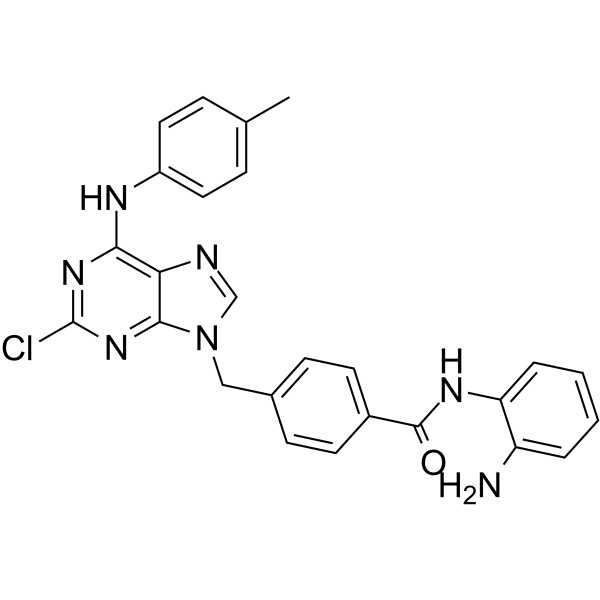
(In Vitro) | HDAC1/2 and CDK2-IN-1 (compound 14d) shows excellent antiproliferative activities against H460, A375, HepG2, HCT116 and Hela cells with IC50values of 1.59, 0.47, 0.86, 0.58 and 1.05 μM, respectively[1].
HDAC1/2 and CDK2-IN-1 (0.5 μM, 48 h) significantly inhibits the migration of H460 and A375 cells[1].
HDAC1/2 and CDK2-IN-1 (0-2 μM, 24 h) significantly blocks the cell cycle in the G2/M phase[1].
HDAC1/2 and CDK2-IN-1 (0-2 μM, 48 h) promotes cancer cell apoptosis in a dose-dependent manner[1].
HDAC1/2 and CDK2-IN-1 (1 μM, 12 h) inhibits CDK2 and HDAC activity, causing cancer cell death[1].
HDAC1/2 and CDK2-IN-1 (1 μM, 24 h) strongly increases ROS levels in A375 cells, causes cancer cell death by improving intracellular ROS levels[1].
Cell Cycle Analysis | Cell Line: | A375, HCT116, H460 and Hela cells[1] | | Concentration: | 0, 0.5, 1, 2 μM | | Incubation Time: | 24 h | | Result: | Significantly blocked the cell cycle, induced a loss of G0/G1 phase cells and an increase of G2/M phase cells, led to an apparent accumulation of cells in G2/M phase at 0.5 μM (A375, the percentage from 13.70 to 57.03%; HCT116, from 27.46 to 76.99%; Hela, from 7.89% to 51.85%). |
Apoptosis Analysis | Cell Line: | A375, HCT116, H460 and Hela cell lines[1] | | Concentration: | 0, 0.5, 1, 2 μM | | Incubation Time: | 48 h | | Result: | Promoted cancer cell apoptosis in a dose-dependent manner, with the apoptosis rates of 91.99% (A375), 89.60% (HCT116), 59.10% (H460), and 22.36% (Hela) respectively at the concentration of 2 μM. |
Immunofluorescence | Cell Line: | A375 cells[1] | | Concentration: | 1 μM | | Incubation Time: | 12 h | | Result: | Significantly inhibited CDK2 and increased the acetylation level of histone H3, inhibited CDK2 and HDAC activity, causing cancer cell death. |
|
体内研究
(In Vivo) | HDAC1/2 and CDK2-IN-1 (BALB/c nude mice, 0-100 mg/kg, IP, once daily for 21 days) significantly inhibits the tumor growth[1].
HDAC1/2 and CDK2-IN-1 (compound 14d) (ICR mice; 4 mg/kg, IV; 20 mg/kg, IP) exhibits desirable pharmacokinetic properties[1].
Pharmacokinetic Parameters of HDAC1/2 and CDK2-IN-1 in male ICR mice[1].
| Dose (mg/kg) | 4 | 20 | | Administration | IV | IP | | T1/2(h) | 1.48 | 2.84 | | Tmax(h) | | 2 | | Cmax(ng/mL) | | 1360 | | AUC0-t(ng/mL*h) | 2850 | 7240 | | MRT0-t(h) | 0.563 | 4.54 | | CL (mL/(min/kg)) | 23.3 | | | F (%) | | 50.8 |
| Animal Model: | Male ICR mice (n = 9)[1] | | Dosage: | 4 mg/kg (IV), 20 mg/kg (IP) | | Administration: | IV, IP, once (Pharmacokinetic Analysis) | | Result: | Exhibited desirable pharmacokinetic properties. |
| Animal Model: | BALB/c nude mice (5-6 weeks, HCT116 xenograft model)[1] | | Dosage: | 0, 25, 50 and 100 mg/kg | | Administration: | IP, once daily for 21 days | | Result: | Significantly inhibited the tumor growth, the tumor growth inhibitions were 28%, 40% and 44% at doses of 25, 50 and 100 mg/kg, respectively. |
|